When we map customer segments for controlled environment agriculture, the usual list is retailers, food service, and direct-to-consumer. This month added a segment that belongs on every commercial radar: food banks.
Two separate developments — one in Canada, one in the US — show the same pattern from different angles.
Case 1: The farm inside the food bank
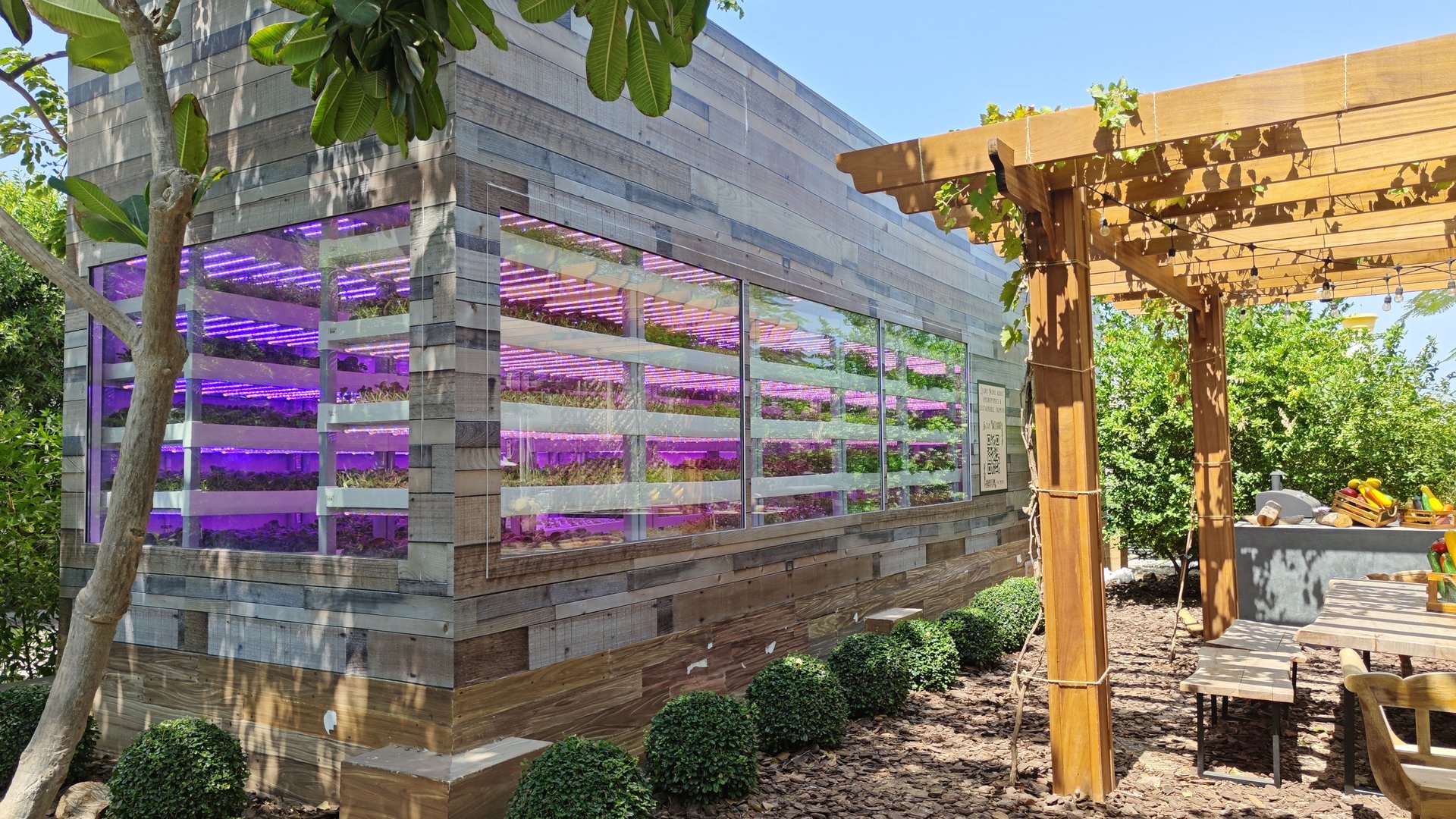
In Regina, Saskatchewan, a 40-foot hydroponic container farm built by Growcer is now operating inside the Regina Food Bank's premises, producing roughly 800 heads of lettuce per week.
The project was backed by a $250,000 grant from Farm Credit Canada, and it's designed to scale: the food bank — which serves 237,000 visits per year — plans to expand into a four-container "Farmplex."
The logic is hard to argue with. Food banks traditionally depend on donated surplus — unpredictable in volume, quality and timing. Fresh produce is the hardest category to source and the first to spoil. A container farm on-site converts donated dollars into a permanent, predictable fresh food asset: same output every week, regardless of season, donations or supply chains.
Case 2: Food banks as a formal supply chain tier
In the US, Cox Farms — one of North America's largest greenhouse operators — has integrated Feeding America as a formal customer channel, with more than 4 million servings of fresh produce already supplied.
This is a different model from Regina's, and arguably the more significant one commercially. Cox isn't placing farms in food banks; it's treating the food assistance network as a structured buyer with recurring demand — the same way it would treat a grocery chain.
Why this segment matters
Food assistance is easy to dismiss as charity, not commerce. The numbers say otherwise:
- Funded demand. Food banks and assistance programs operate on real budgets — government grants, corporate giving programs, foundation funding. The Regina project was financed by a national agricultural lender. This is a customer that pays.
- Structural stability. Demand for food assistance doesn't follow economic cycles — it inverts them. For a CEA operator, a food bank contract is countercyclical revenue.
- Institutional procurement habits. Once a food assistance network validates a supply model, it replicates across chapters and regions. Feeding America alone is a network of 200+ food banks.
The bigger picture
CEA has spent years proving it can win the premium end of the market. These two cases show it winning the other end — on reliability, predictability and year-round local supply rather than price.
A customer segment that buys for exactly the reasons controlled environment production exists — and pays with institutional funding — is not a side story. It's a channel.
We expect the food assistance segment to appear in more CEA commercial plans within the year. The operators who build relationships with these networks now will own a defensible, mission-aligned revenue base that retail competitors can't easily touch.
Sources:
- Farms.com: Container farm brings fresh produce production inside the Regina Food Bank (Oct 10, 2026)
- The Packer: Cox Farms integrates Feeding America into its supply chain (Oct 12, 2026)
What this means for growers
The food bank case is a container farm case: modest footprint, fast deployment, predictable weekly output. Regulus container farms combine growing modules, lighting, control, and enclosure into a single turnkey unit – the same configuration logic that makes a 40-foot installation viable inside a building that was never designed for farming.