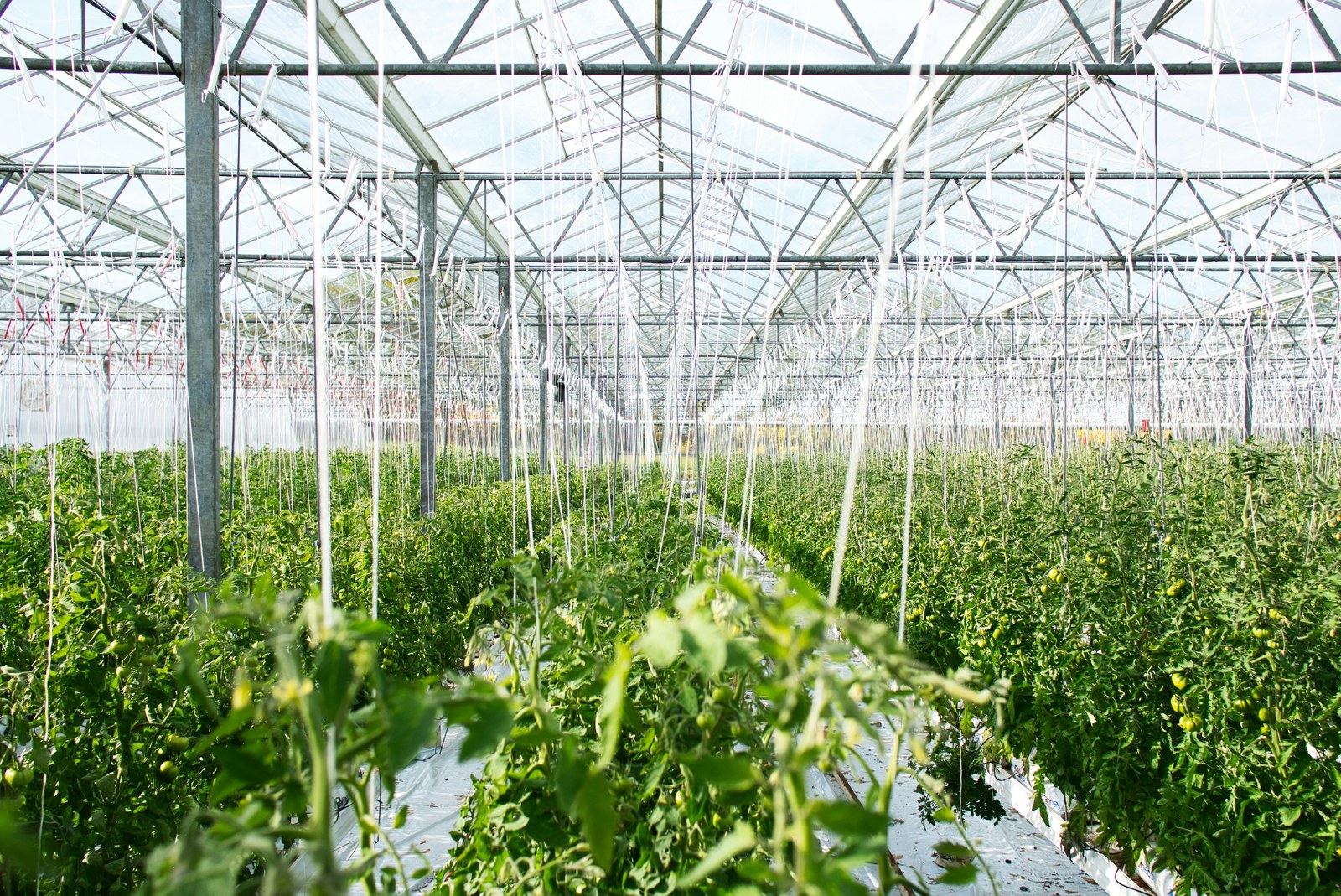
For more than a decade, commercial lighting procurement revolved around a single parameter: photosynthetic photon efficacy (PPE) measured in micromoles per joule. Today, diode efficiency gains are leveling off while industrial electricity tariffs climb. That purchasing logic is shifting. Commercial growers are discovering that fixtures with high laboratory output can deliver poor balance-sheet returns if operated on rigid timers regardless of daylight.
An industry survey published by Greenhouse Grower gathered technical leadership from four major horticultural lighting manufacturers: Signify, Sollum Technologies, TotalGrow Lights, and California Lightworks. Their shared consensus indicates a structural transition across Controlled Environment Agriculture (CEA). Over the next 5 years, competitive advantage is moving from minor component gains toward dynamic spectral control, canopy sensor integration, and active demand-charge management.
Modern facilities need hardware platforms tying lighting, canopy sensors, and integrated environmental control systems into a closed operating loop. Four technical priorities define this operational transition.
Total 10 to 15-Year Lifecycle Value Beats Upfront Fixture Price
Commercial greenhouse lighting represents an investment designed for a 10 to 15-year operational lifecycle. Michal Hanan, Commercial Sales Leader North America at Signify, emphasized that comparing systems strictly on upfront purchase price or nominal efficacy produces a dangerously incomplete financial calculation.
Engineering assessments must evaluate practical electrical factors that dictate recurring maintenance overhead. These include inrush current, total harmonic distortion across electrical panels, driver component longevity, and thermal dissipation under humid conditions. With utility tariffs rising across major production hubs, continuous operating expenditure has become as critical as initial capital cost.
George Mekhtarian, CEO and Chief Engineer at California Lightworks, highlighted that growers should evaluate the installed cost per delivered micromole over time rather than simple luminaire wattage. Systems lacking robust electrical safeguards or field-serviceable power supplies frequently incur downtime that cancels upfront procurement discounts.
Canopy Sensor Data Exposes Perimeter Uniformity Drops and Daylight Waste
Before commissioning new equipment or rearranging layouts, growers require objective measurements of photons reaching actual plant tissue. Kassim Tremblay, Senior Vice President of Sales and Marketing at Sollum Technologies, recommends mounting quantum sensors directly at canopy level to record the daily light integral (DLI) continuously across an entire winter season.
Conducting bench audits reveals two operational blind spots. First, photon uniformity drops near posts, gutter runs, and outer bench borders compared with idealized ray-tracing models. Second, on clear winter afternoons, unmonitored fixtures burn maximum wattage long after natural solar radiation has already met the crop’s light saturation point.
Integrating responsive controllable indoor grow lights with dynamic dimming capability allows operators to curtail supplemental draw during utility demand-spike windows. Mitigating demand charges significantly lowers greenhouse operating overhead while maintaining consistent cumulative daily photon targets.
Crop-Specific Spectra and Far-Red Tuning Supersede Fixed White Solutions
Modern commercial versatility requires modular spectral control rather than fixed broad-spectrum emission. In floriculture and vegetable crops, light quality governs plant architecture, stem elongation, and photoperiodic floral induction.
Specific blue wavelengths remain an effective tool for controlling stem stretch in young vegetative cuttings. Conversely, adding targeted far-red light to photoperiodic lighting cycles accelerates flowering in long-day crops like petunias and snapdragons. In commercial production, multi-channel LED installations enable growers to apply far-red signals during specific development windows while dimming primary channels during peak natural daylight.
Commercial facilities like Hollandia Greenhouses and Vreugdenhil-Klugt deploy steerable LED installations that adapt light recipes to daylight. Lighting suppliers unable to match spectral recipes to a grower’s specific crop list risk delivering rigid hardware that restricts future rotation.
The Five-Year Horizon Belongs to Dynamic Software Control and Verified Crop Yields
Within the next 5 years, legacy high-pressure sodium luminaires are projected to become rare across commercial new-build projects and glasshouse retrofits. As physical diode efficiency improvements plateau, the next wave of energy savings will depend on software algorithms deciding exactly when fixtures fire, at what intensity, and with what dynamic spectral balance.
Jeff Mastin, Director of Lighting Science and Product at TotalGrow Lights, noted that while sensors and vision systems will inform lighting controls, automation strategies must align with operational realities. A northern monocrop greenhouse will capture substantially higher returns from autonomous dynamic control than an ornamental nursery receiving ample southern solar radiation.
Ultimately, commercial operators will judge lighting investments on biological and financial metrics rather than theoretical wattage. Industry evaluations are shifting toward harvest timing precision, canopy uniformity across bench borders, and power cost per pot. Lighting systems engineered with flexible controls, demand-response capability, and transparent performance data will lead the next phase of greenhouse production.