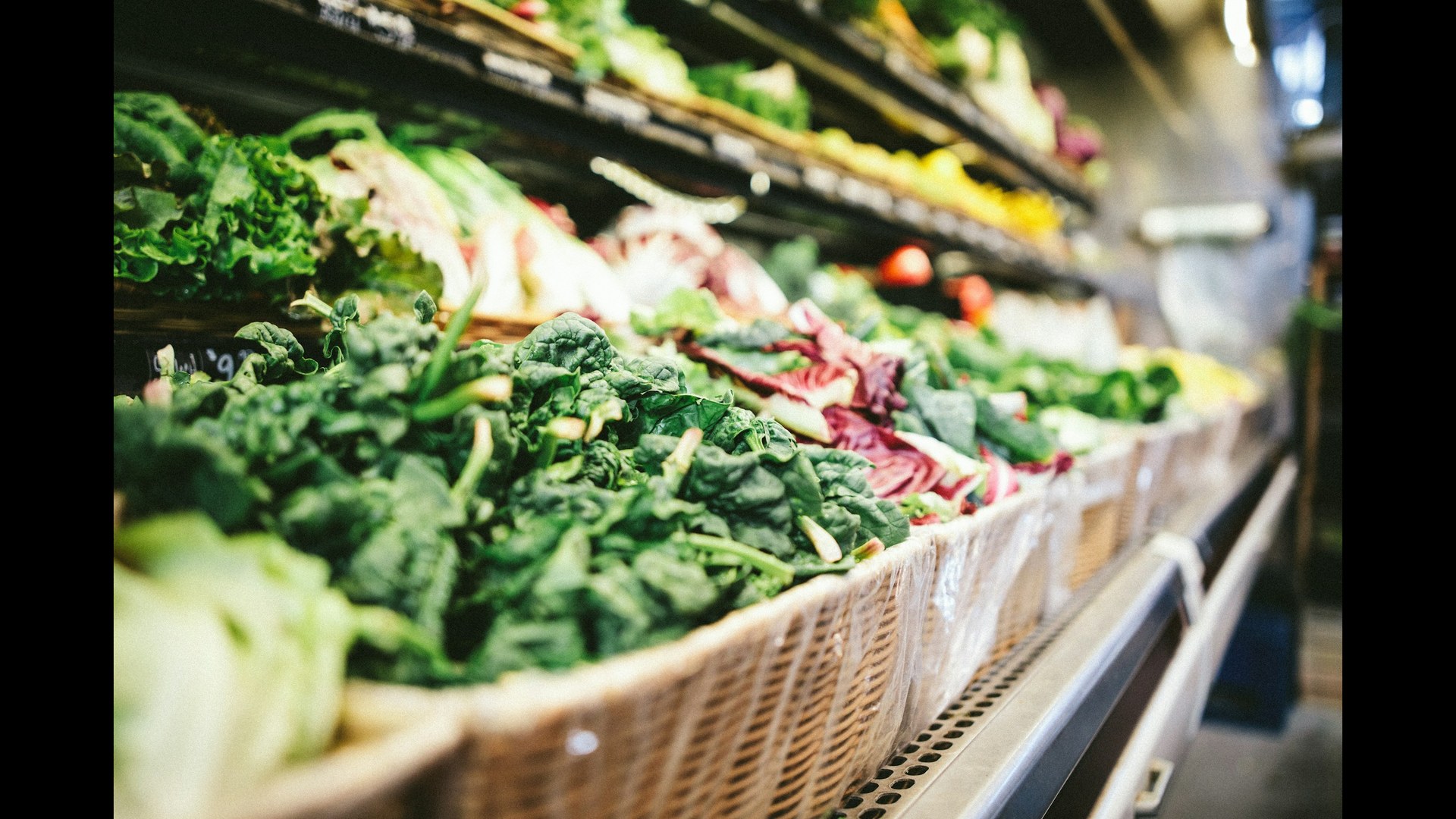
Greenhouse produce has spent years being framed as a technology story — LEDs, climate computers, robotics, vertical racks. A new report from Cox Farms suggests the market is now being driven by something much less technical: shoppers who are worried about whether their lettuce is safe to eat.
The report, State of Greenhouse Agriculture: Safety and Supply Dynamics Drive Continued Greenhouse Growth, draws on NielsenIQ, USDA, Numerator and a proprietary Morning Consult study. It is one of the few clean demand-side datasets in a sector that usually argues about unit economics. And the numbers reframe what greenhouse production is actually selling.
The packaged salad number is the story
Greenhouse tomatoes, cucumbers, peppers and packaged salads all outperformed their field-grown counterparts in year-over-year growth. Packaged salads were the standout: greenhouse products grew 27.4% while field-grown salad declined over the same period.
The more interesting figure is underneath it. Greenhouse products represented only about 8.7% of packaged salad sales — yet they generated all of the category’s growth.
Read that again. A segment holding less than a tenth of sales produced one hundred percent of the increase. That is not a niche finding favourable to a small player; it is a structural signal about where retail demand is moving. When a category’s entire expansion comes from a single-digit share, the rest of the category is in decline and the growth is concentrated in one production method.
Food safety became a purchasing trigger
The mechanism behind that shift is visible in the survey data. The 2026 Cyclospora outbreak produced measurable behaviour change: 87% of produce shoppers were aware of it, 69% expressed concern, and 58% changed their produce purchasing habits as a result.
Fifty-eight percent is not a marginal reaction. It means a majority of shoppers altered what they bought because of a food safety event. The report’s interpretation is that greenhouse products benefit from consumer perceptions of greater control, consistency and reliability during supply chain disruption.
Retail results support it. Retailers carrying larger greenhouse assortments generally performed better both before and after the outbreak — and those with the highest greenhouse penetration recorded smaller sales declines than those with less. That is the commercially decisive detail: greenhouse supply did not just grow, it acted as a buffer in a bad period for the category.
An awareness gap that content can close
Here is the contradiction. Only 59% of consumers said they were familiar with greenhouse produce, against 98% of industry professionals. Many shoppers could not tell whether a produce brand used greenhouse or field production.
So demand is moving toward greenhouse production while most of the people doing the buying cannot identify it on a label. The report is explicit about the implication: communicate tangible consumer benefits — freshness, consistency, food safety, sustainability, local production, year-round availability — rather than emphasising production technology alone.
For anyone selling into this market, that is a direct brief. A specification sheet listing spectrum, efficacy and control protocols speaks to the buyer’s engineering team. It does not speak to the retail buyer, and it certainly does not reach the shopper. The 39-point familiarity gap is the space where brand and content work actually has commercial value.
Where the next categories are
The report draws a clear line between established and emerging crops. Greenhouse production is already well established for vine crops — tomatoes, peppers and cucumbers. Leafy greens and berries remain the growth opportunities, as retailers seek more reliable and consistent sources of fresh produce.
That ordering matters for equipment. Vine crops are a solved lighting and climate problem at scale; leafy greens and berries bring different requirements — shorter cycles, tighter uniformity tolerances, different spectrums, more frequent harvests. Suppliers whose product range only addresses the established categories are competing in the saturated part of the market.
The report also notes the role of imports from Canada and Mexico in supporting year-round US greenhouse supply — a reminder that greenhouse capacity is a continental system, not a domestic one.
What the report says about the next phase
Cox Farms identifies three factors that will shape future growth: consumer trust, category productivity and supply reliability.
None of those are technology problems in the narrow sense. Consumer trust is built through communication and consistent eating experience. Category productivity is an operating discipline. Supply reliability is logistics and planning. The hardware — lights, controls, structures — is the enabling layer underneath all three, not the story itself.
For the CEA sector, the useful conclusion is uncomfortable but clear. The strongest demand-side evidence published this year argues that the consumer-facing rationale for controlled environment production has outrun the industry’s ability to explain it. Closing that gap is not an engineering task. It is the next commercial opportunity.